Chickapea Farms,
Artisanal Heirloom Popcorn
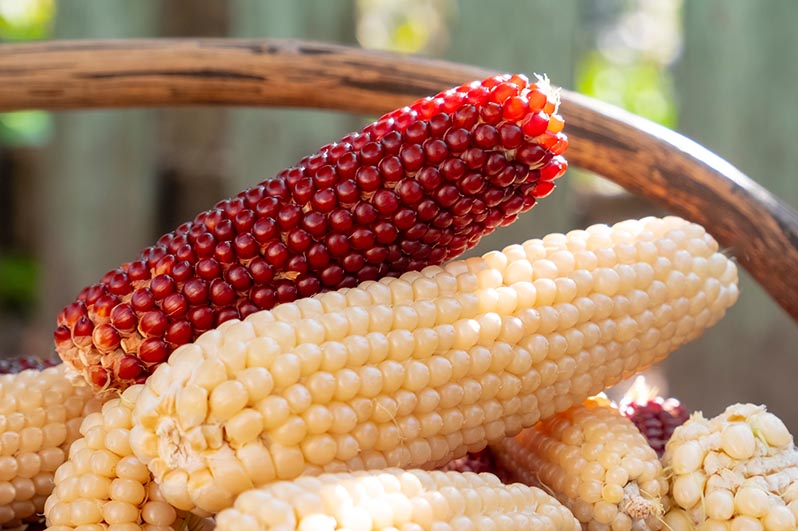
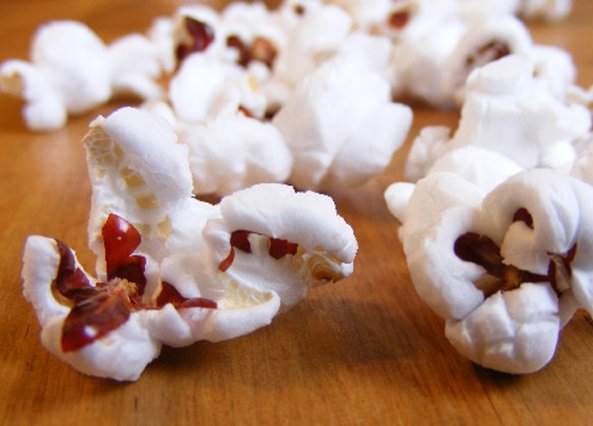
Chickapea Farms' Artisanal Old-Fashioned Heirloom Hulless Popcorn is an heirloom variety because its genetic makeup is virtually identical to the corn/maize that covered North America thousands of years ago. Our Heirloom Hulless kernels have been preserved and grown by the same Michigan farming family for four generations. They grow both red and white kernels, preserved through decades of seed saving and cultivation. The kernels are not genetically modified, hybridized, or altered in any way.
Healthy Eating. Our Heirloom Hulless Popcorn provides a simple, wholesome food enjoyed as a traditional snack, and as our body can best utilize it for healthy eating. It is also recommended as a wholesome snack by medical doctors. Our Heirloom Hulless kernels are smaller and pop smaller, but the benefits below also set our Heirloom Hulless popcorn apart from other standard, store shelf popcorns, organic or not: Flavor and Purity. Heirloom varieties carry the original traits and diverse full flavor qualities naturally inherited by their region. Our Heirloom Hulless kernels have kept their authentic nutty flavor. Most modern day popcorn has been genetically altered or hybridized for higher crop yield, longer shelf life, and appearance, rather than flavor. This may also aid food sensitivities which have been linked to hybridization and GMO foods.
Tender Hulls. Unlike many conventional popcorn varieties, our Hulless Popcorn has exceptionally thin and tender hulls that do not commonly stick between teeth or in gum lines, and are often preferred by individuals seeking a gentler intestinal popcorn experience. Nutrition. In addition to authentic flavor, our Heirloom Hulless kernels retain their natural nutrient profile, offering more nutritional value than processed or hybridized varieties as they are naturally rich in antioxidants, vitamins and nutrients.
Biodiversity. Heirloom seeds allow us to produce food in the face of natural disasters such as drought and disease. Hybridized and genetically engineered seed varieties rely on commercial practices, and seeds cannot be saved from year to year for replanting. Heirloom seeds can be seed banked. Year after year, to continue to preserving its unique genetic characteristics, our Heirloom Hulless Popcorn farmer handles all aspects of the popcorn. For generations his family has seed banked, planted, sown, grown, cultivated, harvested, cleaned, stored, and supplies to only a few approved sellers; growing only what is required for each year's consumption. This allows the kernels to be peak freshness, resulting in exceptional popping performance with up to 99% of kernels popping.
Do the Popcorn Shimmy and Shake
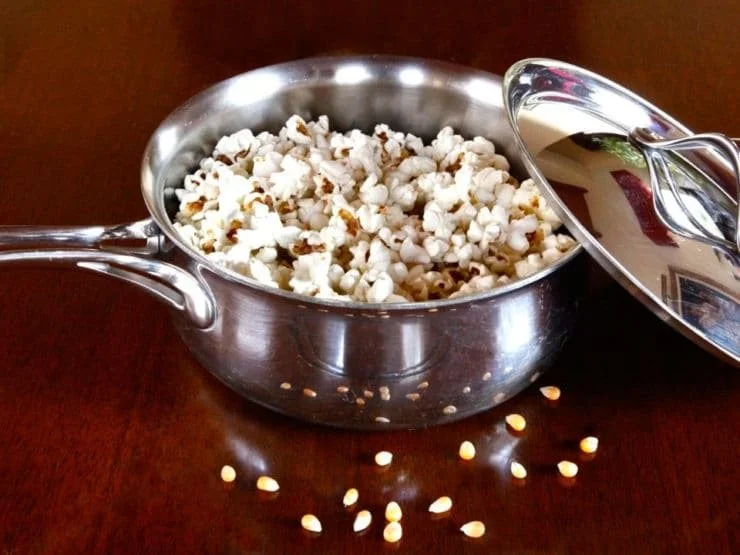
There are many ways to pop popcorn. We recommend the old-fashioned "popcorn shimmy and shake"
Get together a large pot with a fitting lid, one of the three oils: SMOOTH olive oil, coconut oil, or avocado oil, sea salt and Chickapea Farms Heirloom Hulless red or white popcorn kernels.
Measure out approximately 1/2 cup of popcorn kernels and set to the side. (1/2 cup of popcorn kernels makes approximately 4 quarts /16 cups of popped popcorn)
Put just enough smooth olive oil in the pot to cover the bottom by approximately 1/8 inch.
Put the lid on the pot and put it on a burner that is turned to just past medium heat.
Let the oil get hot.
Drop in a few popcorn kernels into the pot and cover.
Once the initial few kernels pop add the kernels that you set aside and replace pot cover.
Now this is where you do the popcorn Shimmy and Shake! Give it a moment and once the kernels start to pop slide the pot back and forth across the burner to get the kernels moving a bit so they don't burn.
Once it sounds like all the kernels have popped, empty the popcorn into a bowl and top with sea salt. Shake the popcorn bowl to allow the salt to fall down between the popcorn pieces. No butter needed.
Nutritional Healthy Snack
●
Easy on Teeth, Gum Line and Gut
●
Artisanally Grown
●
Farm Fresh Through Four Generations of Family
●
Activates Natural Hunting Instincts
●
Nutritional Healthy Snack ● Easy on Teeth, Gum Line and Gut ● Artisanally Grown ● Farm Fresh Through Four Generations of Family ● Activates Natural Hunting Instincts ●
Types of Corn
Flour Corn
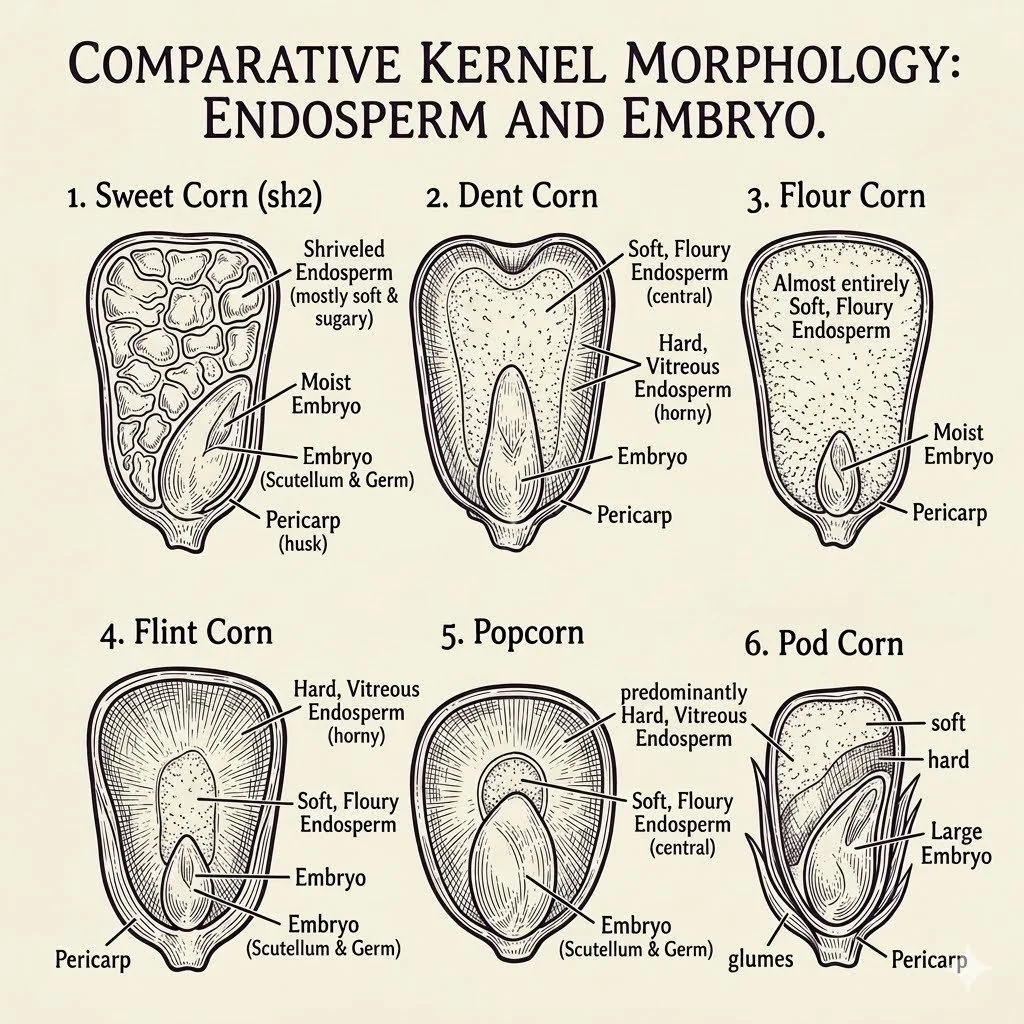
Anatomical Structure: Composed almost entirely of soft, floury endosperm throughout the core, surrounded by a paper-thin shell of hard endosperm. The kernels are chalky white in color, and any vibrant reds, blues, or purples are completely localized within the thin outer aleurone layer.
Culinary Applications: Easily ground into an ultra-fine, delicate flour ideal for baking traditional breads, flat piki bread, and blending into atole. The whole kernels are widely utilized for making posole, dried into chicos, parched as a crunchy snack, or nixtamalized into soft tamale masa.
Key Agricultural Note: This is one of the oldest cultivated corn types, deeply integrated into the ancient agricultural heritage of Indigenous cultures throughout the American Southwest. The soft nature of the kernel makes it highly susceptible to grain boring insects and moisture mold during long-term storage.
Pod Corn
Anatomical Structure: Distinguished by a primitive mutation where every individual kernel on the cob is completely enclosed in its own separate, leafy chaff husk called a glume. The internal kernel structure mirrors a standard wild flint corn, containing a large embryo and dense starch.
Culinary Applications: Rarely used in modern cooking due to the labor-intensive process of manually removing the papery glume from each kernel before grinding. When processed, it can be utilized like flint corn for coarse hominy, rustic cornmeal porridge, or roasted whole over open flames.
Key Agricultural Note: Rather than being a wild ancestor of modern maize, it is a genetic variant that represents a fascinating evolutionary throwback. It holds deep ceremonial and spiritual significance among various Indigenous tribes and is grown almost exclusively as an ornamental curiosity today.
Sweet Corn (sh2)
Anatomical Structure: Marked by a shrunken, wrinkled exterior when dried. It contains primarily soft, translucent sugary tissue rather than dense starch blocks, alongside a prominent embryo. This high sugar content is caused by specific recessive genes that actively inhibit the conversion of natural sugars into solid starches during maturation.
Culinary Applications: Consumed fresh as boiled corn on the cob or roasted in its "green" stage for traditional elotes. The dried kernels are often roasted and reconstituted for stews, dried for chicos, ground into pinole, or processed into commercial canned and frozen vegetable products.
Key Agricultural Note: Because the seeds lack dense starch reserves, they have lower germination energy and require warmer soil temperatures to sprout successfully. It must be geographically isolated from field corn varieties during cultivation to prevent cross-pollination from turning the sweet kernels starchy and tough.
Flint Corn
Anatomical Structure: Displays a massive, thick outer layer of dense, hard endosperm that completely encapsulates a very small core of soft endosperm. The outer layer protects the interior starch and is famously likened to being as hard as flint, resisting moisture penetration.
Culinary Applications: Ground into premium, coarse cornmeal highly prized for making Italian polenta, Southern grits, atole, or toasted and ground for pinole. Whole kernels are widely nixtamalized into hominy for masa, and the kernels can even "pop" when heated under the right conditions.
Key Agricultural Note: Highly valued for its exceptional durability, this variety possesses natural resistance to freezing temperatures, damp soils, and destructive storehouse pests. It is predominantly grown in cooler, northern climates like New England and Europe where dent corn varieties fail to thrive.
Dent Corn
Anatomical Structure: Features a pronounced indentation at the crown. It shows a central core of soft endosperm surrounded by thick walls of hard endosperm on the sides. The distinctive "dent" forms because the central soft starch content shrinks rapidly and collapses inward as the kernel dries down.
Culinary Applications: Ground into fine cornmeal for everyday baking, or nixtamalized into hominy to produce masa for authentic tortillas and tamales. It is widely utilized in producing traditional corn beer, hominy grits, or harvested early in the milk stage to be prepared as roasted elotes.
Key Agricultural Note: Representing the vast majority of global commercial corn production, this variety is the foundational backbone of modern industrial agriculture. It is highly valued for its massive yield potential and serves as the primary raw material for animal feed, corn syrup, and ethanol biofuel production.
Popcorn (Hulless)
Anatomical Structure: A specialized variant of flint corn featuring smaller, slightly translucent kernels. It possesses a uniquely thin, fragile pericarp (hull) engineered to trap internal moisture around a dense endosperm matrix. Unlike thick commercial hybrids, this delicate hull is brittle enough to shatter entirely into unnoticeable fragments upon popping.
Culinary Applications: When heated, the trapped moisture expands into steam, building rapid internal pressure until the kernel completely turns inside out into an exceptionally tender, hull-free snack. It can be ground into fine meal for tender grits or polenta, or toasted and ground after popping to create a light pinole.
Key Agriculture Note: Maintaining a precise moisture content between 13.5% and 14% is critical for a full pop. The heirloom hull is exceptionally thin and sensitive to mechanical stress, so these crops must be harvested and shelled with immense care to prevent micro-cracks that would allow steam to escape prematurely.